
What Do I Know That Someone Would Pay to Learn?
Look for the things you do without thinking, the questions people bring to you, and the problems you have already solved for yourself.
Knowledge becomes invisible to the person who has it, which is why almost everyone concludes they know nothing worth teaching.
You are not looking for something rare.
You are looking for something you are further along in than the person who needs it
Why this matters
The most common sentence I hear from women starting this is a version of "but I do not know anything special".
It is almost never true. What is true is that anything you have done for years stops feeling like knowledge and starts feeling like the weather.
It is just how things are, obviously, doesn't everyone know that.
They do not. And the gap between you and the person one step behind you is the useful gap. You do not need to be the world authority. You need to be further along than her, and able to explain how you got there.
Five places to look
Paid work. Not your job title, the actual tasks. What were you the one they came to about? What did new people always get wrong at first?
Unpaid work. Running a household on a tight budget. Coordinating care for a parent. Chairing a committee. Organising a family through a move, a funeral, an illness. This is real knowledge that simply never had a payslip attached.
Long hobbies. Anything you have done for ten years is a body of knowledge, whether it is gardening, sewing, genealogy, canning or bookkeeping for the local club.
The hard thing you got through. A divorce, a business that closed, a health scare, a move to a new country, going back to work after years away. Coming out the other side of something teaches you a route, and there is always someone at the start of it.
A hands-on skill you already do for a living. Dog training, painting, upholstery, cake decorating, piano, carpentry, floristry, sewing, gardening for other people. This is the strongest position of the lot, because you have already proved someone will pay you for it. The only question is what part of it can travel.
If your skill is physical, what actually goes online
Plenty of real skills live in the hands, and the first assumption is that they cannot be taught through a screen. That is half right, and the half that is wrong is where the money is.
What does not travel is the doing. You cannot groom the dog, throw the pot or fit the chair from here.
What travels is everything around the doing, and it is usually the part people are stuck on.
The decisions. A dog trainer's real skill is not the sit. It is knowing why this dog is doing that, and what to change first.
Diagnosis travels perfectly.
The order. Anyone can find a hundred techniques online. What they cannot find is which one to do in week one, and what to ignore until week six.
Sequence is worth paying for.
The mistakes. You know the five things beginners always get wrong, because you have watched them get them wrong for fifteen years. That list does not exist anywhere else.
The judgment call. When is it good enough. When do you start again. When do you call a professional. This is the thing nobody teaches and everybody needs.
The critique. An artist watching a student's work and saying what to change is a service that works entirely by photograph, and it can be worth more per hour than teaching the technique was.
So the format follows the skill. A physical craft often works better as a critique service, a live session with feedback, a fault-finding guide, or a short course on the decisions rather than the movements.
The hands stay in the room. The thinking goes online.
The same line applies to practical trades, and it is worth naming because it is easy to drift over.
A dog trainer can teach loose lead walking and should not diagnose why a dog is biting, which belongs with a behaviourist or a vet. An artist can teach technique and should not value a painting. Someone who renovated her own house can show what she did and should not tell a stranger her wiring is safe.
In every case the rule is the same. You can teach the route you took. You cannot take responsibility for an outcome you cannot see, in a situation you have not assessed, for a person you have never met.
The strongest evidence is what people already ask you
Forget what you think you should know about. Look at what people actually bring you.
What do friends text you about? What has someone thanked you for that felt like nothing to you? What do you find yourself explaining more than once?
That is not a hunch. It is evidence, collected over years, that a real person had a real need and came to
you with it. Write those down before anything else.
Experience is not the same as expertise, and the difference matters
Here is the line I would keep.
You can say what you have done, what happened, and what you learned from it. You can teach a method you actually use. You can show someone the route you took.
You cannot claim a qualification you do not hold, and you should not stray into advice that belongs to a professional. Legal, financial and medical are the obvious three. "Here is how I organised my paperwork" is yours to teach. "Here is what you should claim on your taxes" is not.
That boundary is not a limitation. It is the thing that makes you trustworthy, and it is what separates you from the people selling confidence they do not have.
An example
An illustration, not a customer story.
Someone spent eleven years homeschooling three children, then went back to work.
She is certain she has nothing to teach, because homeschooling is finished and it was just her family.
What she actually has:
a working knowledge of how to build a week's structure around a child who
resists structure
how to teach one subject to three different ages at once
how to handle the paperwork her province required
how to keep going in February when everyone has stopped cooperating.
There are parents starting that journey this year who would pay for the February chapter alone.
Nothing was invented. It was invisible to her because it was hers.
Try this now
Ten minutes. Write four short lists, no editing:
What I know how to do What I have actually done What people ask me about What I could help someone finish
Then paste this:
Here are four lists about my experience: [paste]. Ask me questions about anything unclear, one at a time, until you understand what I really did.
Then tell me the three areas where I know more than a beginner, and for each one, what problem it would solve for someone. Use only what I have told you. Do not add anything.
Common questions
Does it count if I have no qualification?
For teaching a practical skill you have used, yes. Be clear about what you are: someone who has done this, not someone certified in it. Say so plainly and most people are perfectly happy.
What if other people already teach this?
Good. It means there is a market. Nobody teaches it in your words, from your route, to the person who happens to trust you.
How do I know if it is worth money rather than just interesting?
Someone has to have a problem they want solved. Interesting is a topic. Valuable is a problem. The next guide is about finding out which you have.
Is it wrong to teach something I am still learning?
Not if you are honest about where you are. Teaching one step ahead is legitimate and often clearer than an expert who has forgotten what confusion feels like. Claiming mastery you do not have is a different thing.
Your next step
Continue the journey. Read Guide 6: Who is my first customer, and how do I find her without a following? https://www.winninglifestylesonline.com/guides/who-is-my-first-customer
Learn with WLOL: Your Knowledge, Online, $147. Find your niche, choose the right format, and build your own digital offer. https://www.winninglifestylesonline.com/ai-business-builder
More guides: https://www.winninglifestylesonline.com/guides
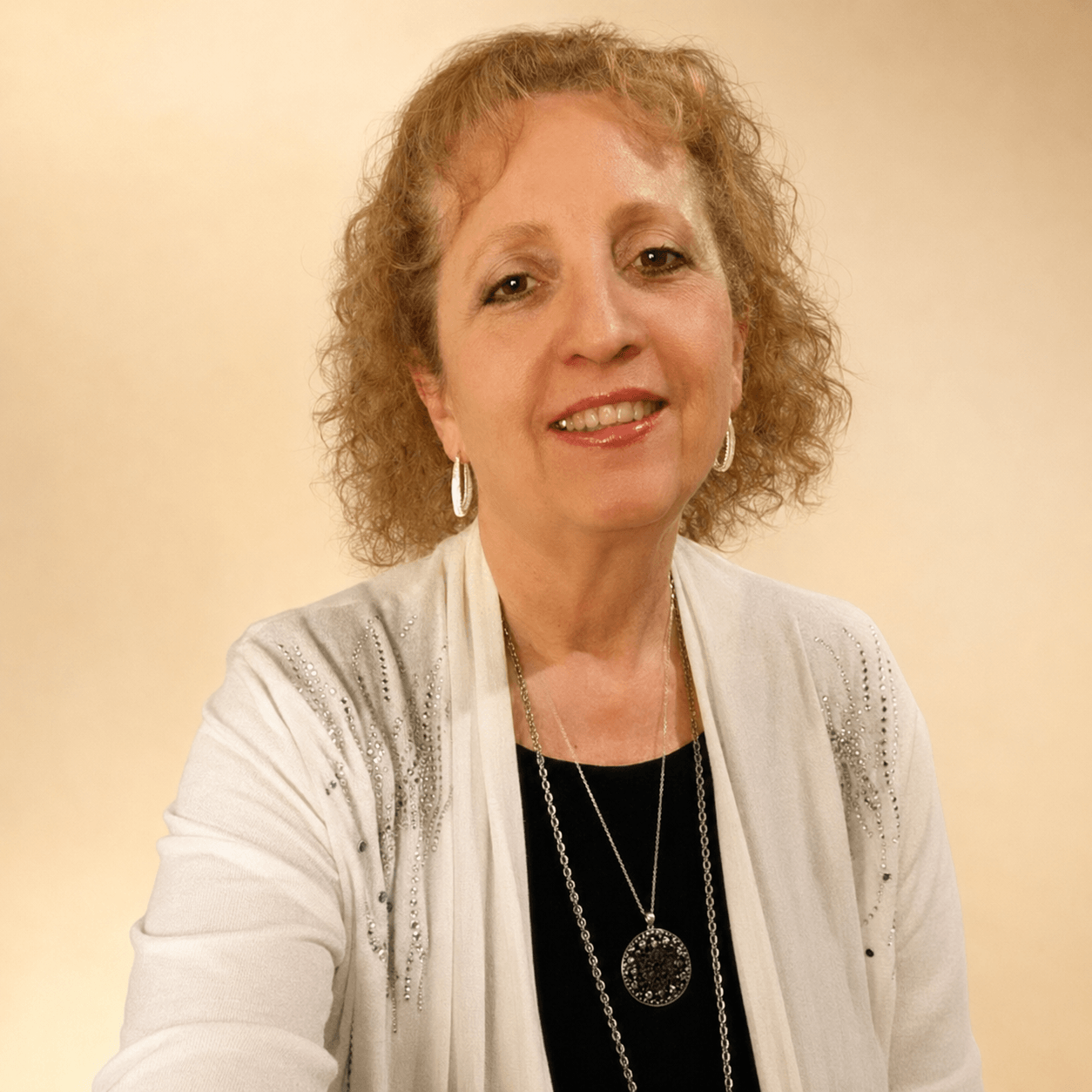
About Louella and Winning Lifestyles Online
I am Louella. I teach AI to women who are changing direction in their working lives, whether that is going back to work, repositioning, or watching their field change underneath them.
I started learning this in January 2023, when a company I was involved with announced they were shelving finished programs and going back to the drawing board because of AI. I decided to understand it rather than wait and see. It changed the direction of my work.
I went to ChatGPT, because it was the one everybody was talking about. I typed in the prompts I had read about somewhere, the way you copy a recipe before you understand the cooking, and it was a good while before I worked out how to use it in a way that actually suited me.
I test these tools myself and report back honestly, including when the answer is that something is not worth your money yet. That is what I write about each month in The AI Lightkeeper, and it is what the courses at Winning Lifestyles Online are built on.
Start here: the free guide, AI Made Simple: The Gentle Start
https://www.winninglifestylesonline.com/free-guide
More from WLOL:
Home: https://www.winninglifestylesonline.com/
The AI Learning Hub: https://www.winninglifestylesonline.com/ai-learning-hub
The AI Lightkeeper: https://www.winninglifestylesonline.com/ai-lightkeeper